
Minneapolis Mom Builds Community Welfare System as Gaps in Public Aid Persist
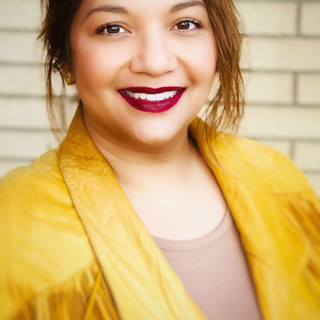

In Minneapolis, where the aftershocks of the murder of George Floyd and Operation Metro Surge continue to shape public life, one grassroots effort is reimagining how communities care for one another.
Zedé Harut, founder and executive director of Seeds Worth Sowing, is building what she calls a community welfare system, a locally sustained network designed to provide immediate, dignified support outside traditional government structures.
From personal crisis to collective care
Seeds Worth Sowing began with a moment Zedé says she never forgot. In 2019, while pregnant and behind on rent, she sought help through county services, an experience that reshaped her understanding of support systems.
“It was just super humiliating, very degrading, and I was just so distraught after that meeting,” Zedé said. “I told myself, I will never experience this again, and I will create something where no other mother feels like this either. One day, I’m gonna create something where they can ask for help and there’s no humiliation connected to it, and you don’t have to explain your trauma.”

That vision remained an idea until 2020, when Minneapolis became the center of national protests after George Floyd was murdered. As unrest disrupted daily life, Zedé noticed a quieter crisis unfolding online.
“There were so many barriers, and no one was catching that,” she said. “Mothers were saying, ‘I don’t know where to get medicine for my kids,’ or ‘I can’t get groceries,’ or ‘I don’t have a ride because the buses are shut down.’ And I just kept seeing it over and over again.”
After dozens of posts, she decided to act.
“I was like, all right, I’m just gonna make a Facebook post and ask my mutuals—does anyone have this, this, and this? I see some moms on my timeline. I’m going to give it to them,” she said. “And from there, there were some moms who commented, like, ‘Actually, I need it too.’ And it just kind of grew from there.”
With help from friends and neighbors, the effort quickly expanded into a coordinated system providing direct aid to families.
The limits of crisis response

In the months following 2020, Zedé saw both the power and fragility of community response.
“In the beginning, there was an urgent response, and then folks just dropped off after three months,” she said. “We were really struggling to respond to the increase of inquiries. It was like 50, 60 mothers that we needed to try and figure out how to still support.”
Even as awareness grew, consistent support did not always follow.
“Folks assume that because more people are aware that this needs to be something to support, that we have all the support, but we still don’t,” she said. “This requires continuous commitments, not just a one time, ‘I’m gonna come and help and drop some supplies off and then go.’ What is your commitment for the long term?”
Beyond mutual aid
While Seeds Worth Sowing emerged from mutual aid efforts, Zedé says the term no longer fully captures what she is trying to build.
“Mutual aid is a crisis response—it’s urgent, short-term,” she said. “What we actually need is a system, something that’s thinking about long-term sustainability and how everyone can access it.”
Her concept of a “community welfare system” expands on those principles, emphasizing shared responsibility and universal access.
“If the individual needing that relief is in such a situation that they can’t actually give back in return, what makes that mutual?” she said. “What we actually need is a system where if anyone can access it, they have the right to do so, and if they can give back later, then they contribute into that system.”
The shift is also about language, moving away from charity and toward collective infrastructure.
“It’s bigger than just helping someone,” Zedé said. “We’re creating an alternative system, something that can last.”
Filling gaps left by policy
Zedé’s work has been shaped by what she sees as the limits of government support, both from her personal experience and more recent policy decisions.
“When I had that experience in 2019, my attitude really shifted from ‘Can they help?’ to ‘If they help, great. If they don’t, not surprised,’” she said.
Rather than abandoning awareness of policy, she redirected her focus.
“These governmental bodies are here to protect a certain identity and uphold a certain structure that doesn’t include marginalized communities,” she said. “So I really want us to focus our attention on models and systems that provide quicker, people-centered, more reliable support than those that we’ve been used to.”
Zedé emphasizes that community systems are not a replacement for public funding, but a necessary complement, especially for immediate needs.
Destigmatizing the need for help

At the core of Seeds Worth Sowing’s work is a cultural shift around asking for help.
“You asking for help is enough,” Zedé said. “You shouldn’t have to prove that you need that help.”
That shift can be difficult, particularly in communities where stigma runs deep.
“A lot of families feel like they have to explain themselves. They’re used to having to explain their trauma,” she said. “I want you to feel safe if you want to share, but I don’t want you to feel like that is what you need to do to get help.”
She also challenges narrow definitions of who qualifies for support.
“In this state of the economy, it actually is so fragile that it doesn’t matter your income bracket,” she said. “What matters is you needing the support—the quick relief. We all need it. We’ve got to move towards actual sustainable systems.”
Teaching others to build
As interest in her work grows, Zedé is focused on helping others replicate the model. Her workshop, “How to Build Your Own Community Welfare System,” walks participants through both the possibilities and the challenges.
“We’ve had a lot of failures. Funders have turned us down from even saying the word mutual aid,” she said. “But what people will learn is that you can create a system that is not invasive, that is direct, and that is quick in response—and that is possible with enough people who care.”
Demand for the sessions has been high. The March workshop is full, but Zedé says there will be another one in April and then monthly as long as there is a demand.
A call for sustained community investment
For Zedé, the future of this work depends not on a single organization, but on widespread participation.
“Pay attention to the efforts and the systems that you are seeing folks hyperlocally trying to maintain,” she said. “Because although we have a lot of ambition and motivation to keep these things alive, it is extremely challenging and isolating—and ten times out of ten, we do need help.”
As Minneapolis continues to navigate public safety strategies and social service gaps, Zedé’s vision offers an alternative rooted in community accountability.
“We’re pulling from what our ancestors have always done,” she said. “We have an alternative system we can make—and we can sustain it.”


Honestly a useful tool if you create lots of online accounts. This name generator helped me come up with a clean Twitch-style username without adding random numbers everywhere.