
Survivors at the Center: Minnesota Moves to Repeal César Chávez Day
Updated: Mar 23

Minnesota lawmakers and community leaders are moving with urgency to repeal César Chávez Day, marking a significant shift in how the state honors historical figures, as allegations of sexual abuse against César Chávez prompt calls for accountability and healing.
The effort follows a recent investigation by The New York Times detailing allegations that Chávez abused young women and girls connected to the labor movement he helped lead. The report has sparked a wave of grief, reflection, and action across Minnesota’s Latine community and beyond.
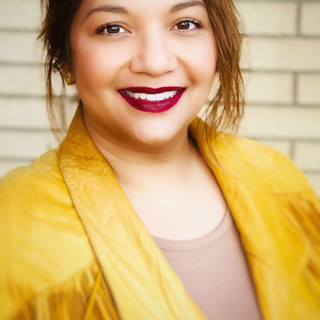
Leading the legislative push is State Representative María Isa Pérez-Vega (DFL–St. Paul), who introduced a bill to repeal the March 31 observance.
“As a survivor, my heart breaks for Dolores Huerta and the countless women harmed and abused by César Chávez,” said Pérez-Vega. “Latine women are disproportionately targeted by sexual violence yet are often forced into silence to 'protect' the reputations of powerful men. This is patriarchal violence: demanding that women of color sacrifice their safety for a 'great man’s' legacy.”
Speaking at a press conference Monday alongside members of the House People of Color and Indigenous (POCI) Caucus, Pérez-Vega framed the effort as a necessary step toward justice.
“This repeal is empowering,” Pérez-Vega said. “It is about showing strength, speaking up, and ensuring that survivors are heard and believed.”
A Movement Bigger Than One Person

Speakers at the press conference repeatedly emphasized that the labor movement Chávez helped build transcends any single individual.
“How can we effectively separate individuals from the movement?” Pérez-Vega asked. “A movement is not one person.”
Community leaders echoed that sentiment, underscoring the importance of preserving the legacy of farmworker organizing while rejecting the harm tied to Chávez himself.
Ramona Arreguín de Rosales, a longtime activist and founder of Academia César Chávez in St. Paul, described the moment as both painful and clarifying. While acknowledging Chávez’s historical impact, she called for immediate changes, including renaming the school and reconsidering public honors.
“We must stand up and do the right thing,” Rosales said. “The movement — la causa — is much bigger than one person.”
Centering Survivors, Breaking Silence

Throughout the event, lawmakers and advocates highlighted a broader cultural shift: one that
prioritizes survivors over legacy. Liish Kozlowski, co-chair of the POCI Caucus, called the repeal “the very foundation of justice,” rejecting the idea that confronting abuse undermines community strength.
“This is not a betrayal,” Kozlowski said. “We are showing what it means to listen, believe survivors, and hold individuals and institutions accountable.”
Advocates stressed that Latine women and marginalized communities are often pressured into silence to protect powerful figures. That dynamic, speakers said, must end. Emilia González Avalos, executive director of Unidos Minnesota, framed the repeal as a moral line.
“No legacy stands above the safety and dignity of our children,” she said. “We can honor the movement without enshrining a single figure beyond accountability.”
Urgency at the Capitol
House leadership is moving quickly. House Majority Leader Zack Stephenson confirmed that lawmakers are seeking to fast-track the bill, potentially bringing it to the House floor immediately. Passage would require bipartisan support.
“We are hopeful and optimistic,” Stephenson said, noting ongoing conversations across party lines. The urgency is driven in part by the calendar: César Chávez Day falls on March 31, just days away,”
“To Dolores Huerta, to the women who have already spoken, and to every person who has lived in the silence of harm: we stand with you,” said Kozlowski. “We will not look away. From one survivor to another — solidarity forever. Our path forward is not weakened by truth — it is clarified by it.”
“As a proud Boricua born on this Dakota indigenous land, I know how deep the pain of this abuse runs,” said Pérez-Vega. “From colonizers who stole and raped, to a modern system built on the backs of Latine women—we cannot simply repair what was designed to exploit us. Our grandmothers bore the consequences of seeking liberation; we are the ones our ancestors bled and cried for. I will show up every single time to answer that call.”
While the legislative effort focuses on repealing the state holiday, broader changes are already under discussion. In St. Paul, officials and community leaders are exploring renaming streets, schools, and murals that currently bear Chávez’s name.
St. Paul Mayor Kaohly Her said her administration has begun coordinating with community stakeholders and Public Works to determine next steps, emphasizing that decisions will be led by residents.


Honestly a useful tool if you create lots of online accounts. This name generator helped me come up with a clean Twitch-style username without adding random numbers everywhere.