
Minnesota Legislature Advances $4.5 Million Compensation for Wrongfully Convicted Marvin Haynes


The Minnesota Legislature is moving forward with a claims bill that would award $4.5 million to Marvin Haynes, who spent nearly two decades in prison before his murder conviction was vacated and all charges were dismissed.
On Wednesday, both the Minnesota House Ways and Means Committee and the Senate Finance Committee approved the 2026 claims bill, advancing it to the next stages of the legislative process. The measure still requires final approval from both chambers and Gov. Tim Walz before compensation can be issued.
The expected payment to Haynes represents the largest exoneration-related compensation package ever from the state and stems from his wrongful conviction as a teenager. Haynes ultimately spent 19 years, six months, and 23 days incarcerated.
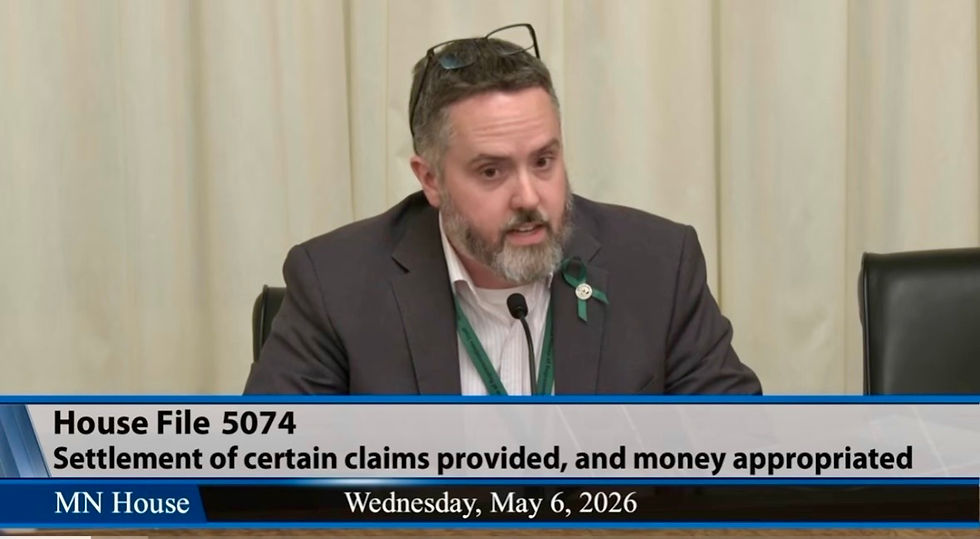
“It is the longest exoneration that we have seen before the subcommittee,” Rep. Luke Frederick said. “I think the longest before this was eight years, which is why the number is so high.”
Frederick said the majority of the claims bill funding is tied to exoneration cases, particularly Haynes’ imprisonment.
“[Mr. Haynes] was in their late teens when they were incarcerated, and then they were almost 40 when they were let out,” Frederick said. “And I cannot imagine having those formative years of a person’s life being taken from them.”
Rep. Paul Torkelson (R-Hanska) called the case “a very lengthy, inappropriate incarceration” and urged lawmakers to support the bill.

“Although it doesn’t give the person the time back in their life, I do think it is appropriate for us to show Minnesotans that we can see when there’s a wrong been done, and we try to redress that wrong,” Rep. Cedrick Frazier said.
In the Senate Finance Committee, Sen. Doron Clark outlined the broader purpose of the claims bill and the legislative claims process, which dates back to 1976.
“The bill represents a balance of justice, responsibility, and due process,” Clark said. “It ensures that when the state makes serious mistakes or when individuals are harmed in its custody, we respond appropriately.”
The bill also includes compensation for two other wrongful conviction cases: $250,000 for James Lamar Davis, whose conviction was vacated because of ineffective assistance of counsel after he served about three years in prison, and $350,000 for Clayton Davis Gross, who spent nearly 52 months incarcerated before being acquitted at retrial.
What About the Impacted Families?

In response to the legislative action, Marvina Haynes — Marvin Haynes’ sister and founder of Minnesota Wrongfully Convicted Judicial Reform — highlighted the years of advocacy and emotional trauma endured by families fighting wrongful convictions.
“I fought for my brother when many people stayed silent,” she said. “I organized, spoke out, pushed systems, challenged narratives, and kept his name alive when it felt like the world wanted us to disappear. The system takes a toll not only on the incarcerated person, but on the people outside carrying the emotional, financial, and spiritual burden every single day.”
Marvina also referenced her push for the proposed “Marvina Haynes Act,” legislation aimed at creating support systems for families of wrongfully convicted individuals, including mental health resources, financial assistance, and improved transparency.
“Too many people want to celebrate the outcome without acknowledging the labor, grief, isolation, and pressure it took to get here,” she said.
“I am proud of my brother. I am proud that truth prevailed. But I will continue speaking honestly about the harm this system causes not only to the wrongfully convicted, but to the people forced to become advocates, investigators, protectors, and healers just to survive it.”


mình có lần lướt đọc mấy trao đổi trên mạng شيخ روحاني thì thấy nhắc nên cũng tò mò mở ra xem thử cho biết. mình không tìm hiểu sâu chỉ xem qua trong thời gian ngắn để quan sát bố cục cách sắp xếp جلب الحبيب các mục và trình bày nội جلب الحبيب dung tổng thể. cảm giác là các phần được trình bày khá gọn, các hurentest berlin mục rõ ràng Huren Berlin nên đọc lướt cũng không bị rối với mình như vậy là đủ để nắm tin cơ bản rồi. جلب الحبيب
👍
Mobile access is probably one reason people search for the ok win app. Before installing any gaming application, I would check whether the version is current and comes from a source that can be verified. It is also useful to review the permissions requested by the app and keep the device updated. These basic checks can help users make a more informed decision about using a mobile gaming platform.
Thank you for shedding light on Marvin Haynes' case. It raises so many questions about justice and compensation—how do we ensure systems are in place to prevent future wrongful convictions? Also, I’m curious how the Wacky Flip relates to overcoming such profound obstacles.
It’s heartbreaking that Marvin Haynes lost nearly two decades to false evidence and flawed eyewitness identification, so this $4.5 million claims bill feels like a small but necessary step toward some justice. I hope the full legislature and Gov. Walz approve it quickly. By the way, I keep a free Grow a Garden 2 calculator I like to share: https://gag2calculator.net/
Здравствуйте! Приятно видеть, когда важные вопросы получают внимание и предпринимаются реальные шаги для восстановления справедливости. Подобные истории напоминают, насколько важно, чтобы судебная система оставалась объективной и открытой к пересмотру ошибок, а в свободное время люди выбирают разные способы отдыха, включая игровые автоматы. Хочется верить, что такие решения помогут укрепить доверие общества к правосудию.